Where is the best place to buy a holiday lodge in Northumberland?
It’s the question we hear most often from people who’ve started thinking seriously about holiday home ownership — and it’s exactly the right place to start. Northumberland is one of the most compelling counties in England to own a holiday home, for reasons that go well beyond a pretty view.
But not all parks in the region offer the same thing. Where you buy, and who you buy with, shapes your ownership experience far more than the lodge specification does. This guide is our honest answer. We’ll tell you the criteria that actually matter, explain what Northumberland offers that nowhere else in England can, and tell you plainly why Forest View — a small, privately owned park on the banks of the River Rede, in 32 acres on the edge of Kielder Forest — is the answer so often for people who take the time to visit properly.
Table of Contents
• The short answer
• What “best” really means when you’re buying
• Why Northumberland is the right region
• The six criteria that actually matter
• What the Kielder area offers that no other location does
• Where Forest View sits in the picture
• How to test this for yourself
• Frequently asked questions
Key Takeaways
| Point | Details |
|---|---|
| "Best" is about the park, not just Northumberland | The operator you buy with — their culture, how long they've been running, how they look after owners day-to-day — shapes ownership more than the landscape. |
| Northumberland is genuinely distinctive for UK holiday home ownership | Dark skies, ancient rivers, wild coastline, the Pennine Way on the doorstep. The region offers something mass-market parks can never replicate. |
| Location within the region matters enormously | A park on the River Rede in Kielder Forest is a completely different experience from a roadside park near a tourist town. Go and feel the difference. |
| The primary conversion event is a viewing, not a booking | You're not looking for a holiday. You're looking for a home you'll visit for decades. A viewing day or experience day is the right first step. |
| The best test is standing on the park | No brochure substitutes for walking the pitches, breathing the air at dusk, and talking to owners who've been there for years. |
 The short answer
The best place to buy a holiday lodge in Northumberland is the park that combines genuine natural setting with an operator you’d still want to be part of in twenty years’ time. Northumberland gives you more unspoiled natural setting than almost anywhere else in England. The harder decision is the park itself.
We won’t pretend Forest View is the only good answer. What we’ll do is tell you the criteria that make the real difference, and let you apply them honestly. When prospective owners do that — and then come and visit — they tend to end up here. We’d rather earn that than tell you to take our word for it.
Pro Tip: The owners who are happiest a decade in aren’t the ones who bought the most impressive lodge. They’re the ones who chose the right park first and the right lodge second.
What “Best” really means when you’re buying
Most “best holiday park” articles are really “most scenic photography” articles — short on the things that actually define ownership. Let’s cut through that.
When you own a holiday home, you’re not buying a lodge. You’re buying a relationship with a park — with its owners, its team, its community of other owners, and its surroundings. That relationship runs for five, ten, fifteen years. The lodge is the physical thing; the park is the experience. The people you’ll deal with regularly are the owners, the grounds team, and the neighbours on either side of you. Their attitude and continuity shape your enjoyment far more than the specification of your hot tub.
The definition of “best” we’d offer:
• A park you’d genuinely want to visit on a quiet Tuesday in November, not just on a sunny weekend in July.
• An operator whose approach to ownership you’d trust in year fifteen as readily as year one.
• A community of other owners who’ve made the same choice and are still glad they did.
• A natural setting that doesn’t wear thin — that offers something different each season.
A lot of parks look right on first viewing. Fewer pass the fifteen-year test. That’s the bar worth setting.
Pro Tip: Ask any park you’re visiting: “How many of your owners have been here ten or more years?” A confident, specific answer tells you more than any brochure.
Why Northumberland is the right region
We’re not neutral here, but the case for Northumberland stands up to honest scrutiny. Northumberland gives you things no other English county can:
The darkest skies in England
The Kielder area is one of the designated Dark Sky Discovery Sites in the UK — which in practice means star visibility that most English families have never experienced outside a foreign holiday. For owners, this isn’t a marketing line; it’s a feature of daily life. Clear autumn and winter nights at Forest View are genuinely extraordinary. It’s a competitive hook with no equivalent anywhere in the mass-market holiday park sector.
Kielder Water and Kielder Forest
Northern Europe’s largest manmade lake, surrounded by England’s largest working forest. The scale is hard to communicate until you’re in it — 200 square miles of forestry with virtually no commercialisation. Walking, cycling, kayaking, wildlife watching, and complete quiet. This is on the doorstep.
The River Rede and wildlife
The River Rede — which runs directly through Forest View’s 32 acres — is a working salmon and trout river with otters, pearl mussels, and kingfishers. This isn’t a managed waterway in a park environment; it’s a genuine wild river. Fishing rights, wildlife watching, and the sound of running water from your decking are part of what the location means.
The Pennine Way
Direct access to the Pennine Way from the park, with Kielderhead National Nature Reserve and Northumberland National Park within easy reach. For owners who walk, this alone justifies the postcode.
The Scottish border
Jedburgh is around 20 miles away; Hawick, Kelso, and the wider Scottish Borders are accessible for day trips in a way that’s genuinely part of ownership life here. It’s a region, not just a park.
Pro Tip: If you’re comparing Northumberland with the Lakes or the Dales, spend an evening at each in the dark. The sky difference is not subtle.
The six criteria that actually matter
Once you’ve settled on Northumberland, the real question is which park. These are the six we’d genuinely apply if we were buying ourselves.
1. Scale and character of the park. Smaller, privately run parks and large commercially managed sites are different products. Ask how many pitches the park has, who runs it day-to-day, and whether ownership is genuinely hands-on. A park where the owners are on-site and know their owners by name is a different proposition from one where you’re managed from a head office.
2. The natural setting, honestly assessed. Is the landscape part of the park’s actual identity, or background scenery? A river flowing through your land, dark-sky credentials, and direct footpath access are different from “nearby countryside.” Ask to walk the pitches at dusk.
3. Longevity and continuity. How long has the park been trading, and under whom? Continuity of ownership and team creates a fundamentally different ownership experience from a business that changes hands or strategy regularly.
4. Transparent pitch fees and ownership terms. Will the park put its annual fees in writing, with history? Will it explain its approach to lodge age and condition clearly? Hesitation here is the answer.
5. The community of existing owners. When you visit, do you meet other owners naturally? Does the park encourage you to talk to them? The settled, long-tenured owner community is often the strongest signal of a well-run park.
6. How the park feels in the quiet season. A park that feels right on a cold November afternoon, with leaves down and mist on the river, is a park that will hold its appeal for years. Visit out of season if you can.
Pro Tip: Score each park against these six criteria as you leave. The exercise strips the sales polish quickly.
What the Kielder area offers that no other location does
The Kielder area — the upper North Tyne valley, around Cottonshopeburnfoot and the River Rede — offers something specific that no other part of the county replicates:
• Complete absence of commercial development. No retail parks, no busy town centres, no tourist infrastructure. Just the river, the forest, and the dark sky.
• The dark sky designation. This is formal and specific to Kielder — it isn’t shared by coastal Northumberland or the Cheviot area.
• Kielder Water itself, 15 minutes from Forest View, with water sports, the Osprey visitor centre, and cycling trails around the reservoir.
• Cross-border convenience. The Scottish border is genuinely close — Jedburgh for a day trip, Hawick for a proper market town, the Borders for walking.
• Tranquility that is structural, not seasonal. This is a remote river valley. It isn’t busy at peak season the way the coast is. The quiet is permanent.
For a specific type of owner — couples, empty-nesters, and professionals looking for genuine escape rather than entertainment — the Kielder area is not just one option in Northumberland. It’s its own category.
 Where Forest View sits in the picture
We’ll be direct, because sidestepping the obvious would waste your time.
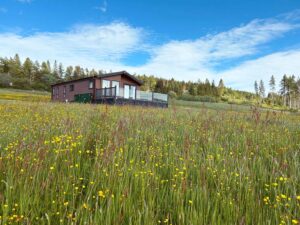
Forest View is a small, privately owned holiday park in Cottonshopeburnfoot, Northumberland — 32 acres on the banks of the River Rede, surrounded by the Kielder Forest on the edge of Northumberland National Park. It’s run directly by its owners, Steve, Paul and Bill, who are on-site and personally involved in the day-to-day. The park doesn’t have a clubhouse, live entertainment, or a swimming pool. Those are deliberate absences, not shortcomings. Read more about this luxury holiday park in Northumberland here.
What Forest View offers:
• A genuine riverside setting. The River Rede runs through the park — this isn’t a managed stream or a decorative feature. It’s a working salmon river with otters and kingfishers.
• Dark sky location. Kielder is one of the best places in England to see stars. Owners who care about this — and more do as they’ve experienced it — aren’t going to find it elsewhere in the market.
• Direct access to walking. The Pennine Way and Kielderhead National Nature Reserve are immediately accessible. This is walking country, not a walk to a car park country.
• A tranquility-led environment. The positioning is deliberate. If you want entertainment and evening activities, Forest View isn’t the right park, and we’d tell you so. If you want peace, wildlife, and to feel genuinely away from the world, it’s hard to find a stronger case.
• A stunning collection of lodges and caravans for sale in Northumberland with prices from £29,995.
Apply these honestly to Forest View and to any other Northumberland park you’re shortlisting. We’re confident in how we come out of that process, which is exactly why we recommend doing it rather than relying on brochures.
Pro Tip: The biggest single purchase many of our owners make in their lives is a holiday home. A second half-day visit to your shortlisted park is the cheapest possible check.
Ready to see it for yourself?
If you’ve read this far, you’re taking the decision seriously. We’d like to be part of the comparison you make.
Forest View is 32 acres on the River Rede, on the edge of Kielder Forest, in one of the darkest sky locations in England. It’s privately owned, personally run, and deliberately quiet. The easiest next step is to book an experience day or a private viewing — we’ll show you the park properly, introduce you to the river, and let the location make its own case.
You can request our ownership brochure, book a viewing directly, or contact the team to talk things through first. No pressure, no pipeline — just a proper look at whether this is the right place for you.
Frequently asked questions
Q: Where is the best place to buy a holiday lodge in Northumberland?
A: The best place is a park that combines a genuinely distinctive natural setting with an operator you’d trust to run it the same way in fifteen years. Northumberland gives you more real countryside options than most English counties — coast, Cheviot Hills, Kielder Forest, the North Tyne valley. Within that, the Kielder area offers something specific: the UK’s best dark sky designation, one of England’s great wild rivers, and direct access to the Pennine Way. The park itself — its scale, ownership, and culture — matters more than the postcode.
Q: Is Northumberland a good place for holiday home ownership?
A: Yes — and increasingly so. The combination of genuine wilderness (Kielder Forest, the Northumberland National Park, the Cheviot Hills), coastline, and relative affordability compared to the Lake District or Cornwall makes it a strong region for serious ownership buyers. Dark sky tourism, wildlife, and walking are growing in appeal among the 45–65 demographic that forms the core ownership market. Northumberland remains less commercialised than equivalent regions, which is either a drawback or a strength depending on what you’re looking for.
Q: What is the difference between a holiday lodge and a static caravan?
A: In practical terms, lodges tend to be larger, built to a higher specification, and on insulated timber bases with a more residential feel. Static caravans are the traditional steel-framed holiday home — smaller, more economical, still comfortable for most ownership purposes. Both are purchased as second homes rather than permanent residences, with ongoing site fees paid to the park. At Forest View, both lodge and static options are available across a range of specifications and price points.
Can I live in a holiday lodge permanently?
A: Not at most parks and not at Forest View. Holiday home ownership here is for leisure use — it’s a second home, not a primary residence. Park seasons typically run for nine to twelve months of the year, depending on the specific park and pitch. If you’re considering a primary residence, this is a different product category and a different legal and planning context.
What should I look for when visiting a holiday park?
A: Beyond the location and the lodges themselves: how long the operator has been running, whether ownership is hands-on, what the annual fees have been over the past two or three years, how the park approaches lodge age and condition on pitch, and what the existing owner community is like. Ask to speak to current owners and, if possible, visit in the off season as well as peak season. The gap between how a park presents itself in summer and how it feels in a quiet November gives you the most honest picture of long-term ownership.
